· Sherleaf Team
Red Blistered Leaves on a Peach Tree — Peach Leaf Curl Explained
Thickened, puckered, red-tinged peach leaves in spring mean peach leaf curl. Why spraying now will not help, and when it actually works.
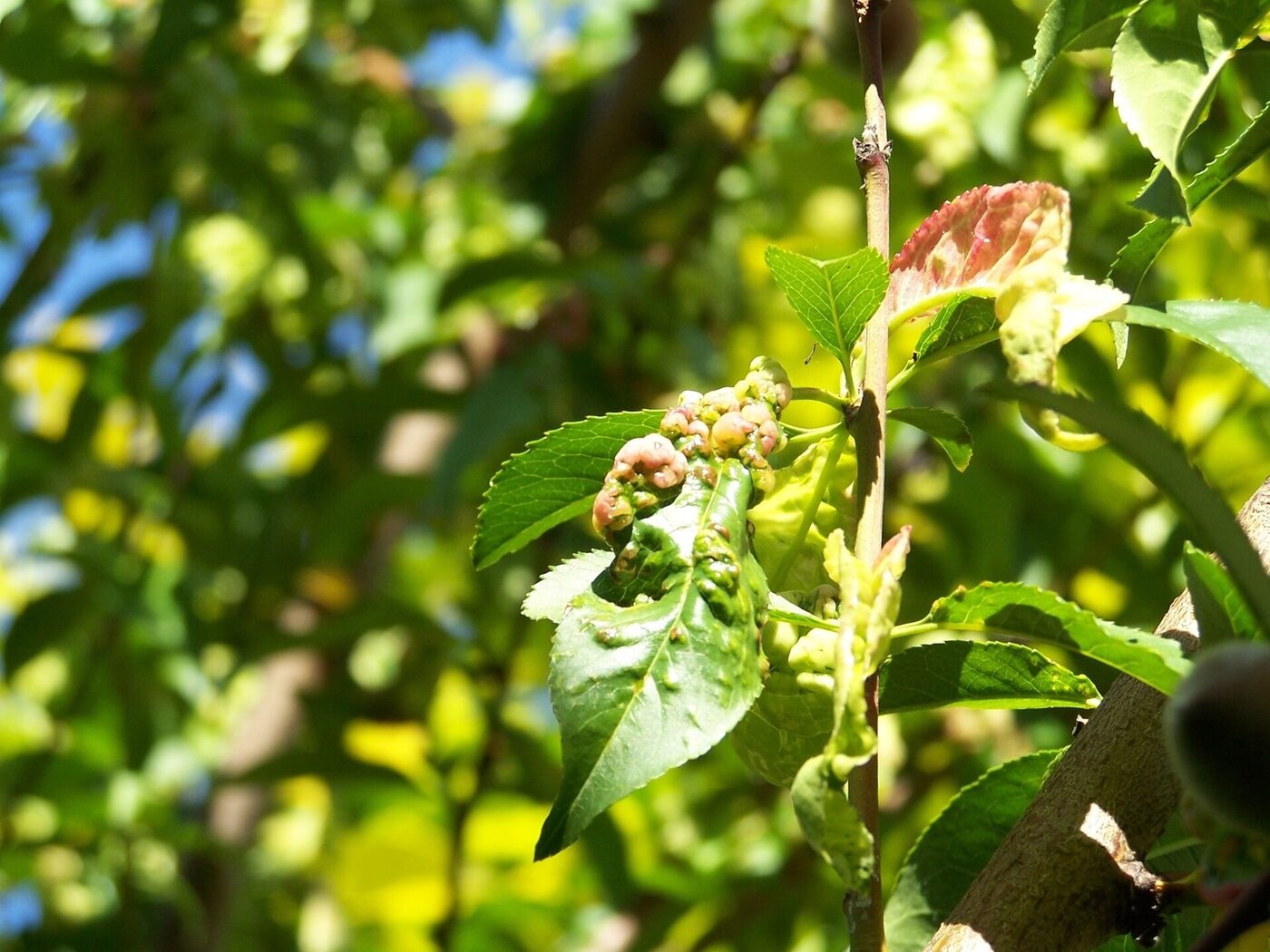
Photo: Daniel Das, CC0, via Wikimedia Commons
Peach leaves that are thick, puckered and flushed red or pink are showing peach leaf curl — a fungal disease caused by Taphrina deformans. It is one of the few plant problems where the timing of treatment matters more than the treatment itself.
How to be sure
Peach leaf curl is unusually distinctive. Affected leaves are swollen and rubbery rather than flat, wrinkle into blisters, and turn pale green, then red or purple. Later a fine white bloom of spores appears on the surface, and the leaves drop.
- Aphid damage curls leaves too, but you will find the insects, and the leaf stays thin rather than thickening.
- Frost damage browns leaf edges and does not redden or blister the whole leaf.
- Powdery mildew sits on the surface as a dusty film and wipes off; leaf curl swells the leaf tissue itself.
Why spraying now will not help
This is the part most people get wrong. The fungus infects buds before they open, during cool wet weather in late winter and early spring. By the time you can see curled leaves, the infection happened weeks ago and is sealed inside the leaf. No spray will reverse it.
What to do this season
- Pick off and bin the affected leaves. Not to cure the tree — to reduce the spores that overwinter on bark and buds.
- Feed and water. A badly affected tree loses much of its first flush and has to produce a second. Keep it watered and give a balanced feed so it can.
- Do not panic-prune. The tree usually pushes healthy replacement leaves in early summer and recovers.
The spray that does work, and when
Copper-based fungicide, applied at leaf fall in autumn and again at bud swell before the buds open. Miss that window and the year is decided. Two applications, three weeks apart, are more reliable than one.
Keeping the tree dry helps as much as spraying: rain landing on swelling buds is what carries the spores in. Under a wall, a temporary rain shelter over a fan-trained peach from midwinter to spring prevents most infection.
What Sherleaf says about this photo
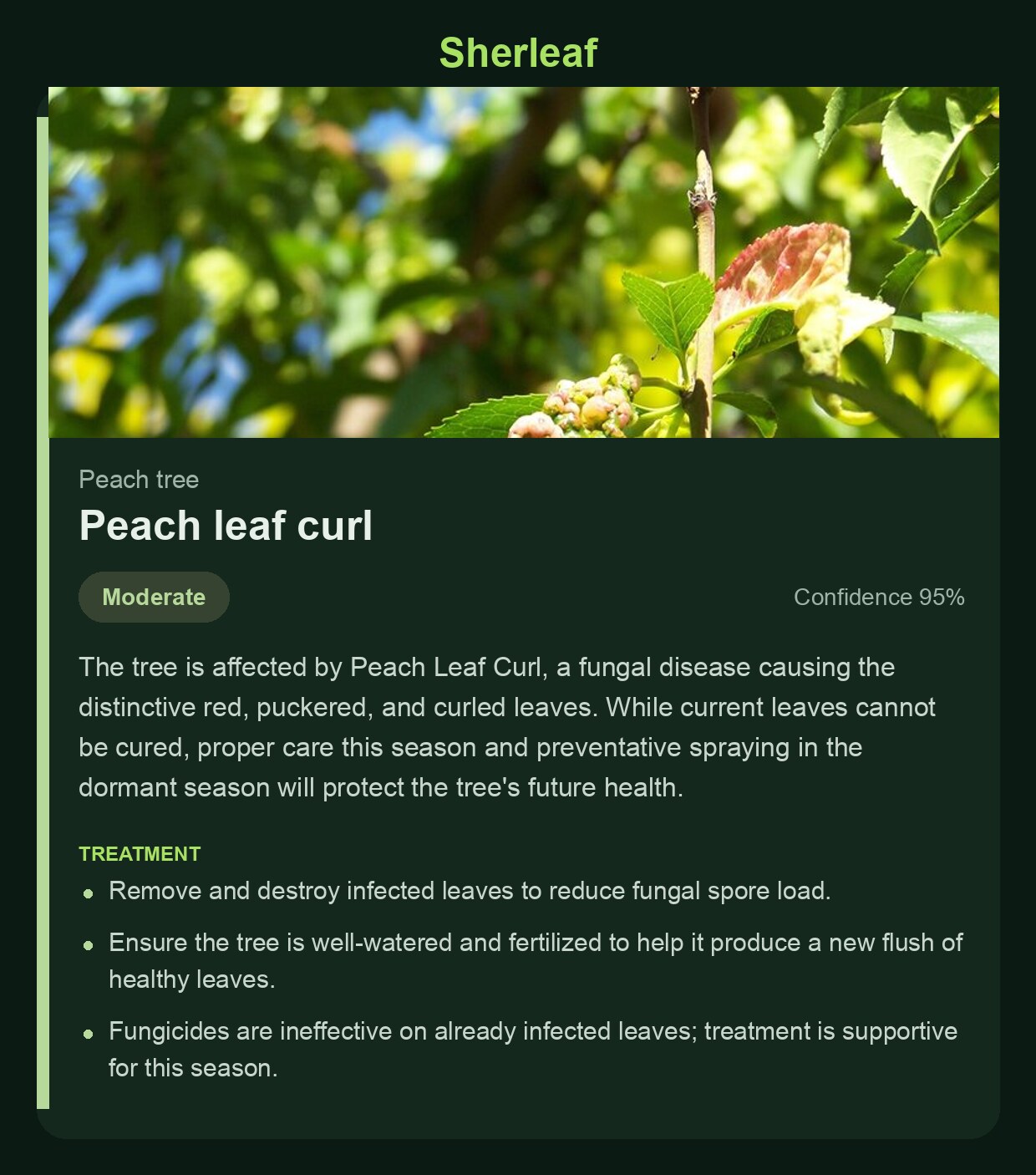
We ran the photo above through Sherleaf. It identified the plant, named the disease, rated the severity and returned a treatment plan in seconds — this is the actual result, unedited.
Try Sherleaf free
Snap a photo of your sick plant and get an AI diagnosis in seconds.