· Sherleaf Team
Black Spots on Rose Leaves — Black Spot and How to Stop It
Dark blotches with feathered edges and yellowing leaves mean rose black spot. How to tell it from other leaf spots, and the routine that actually breaks the cycle.
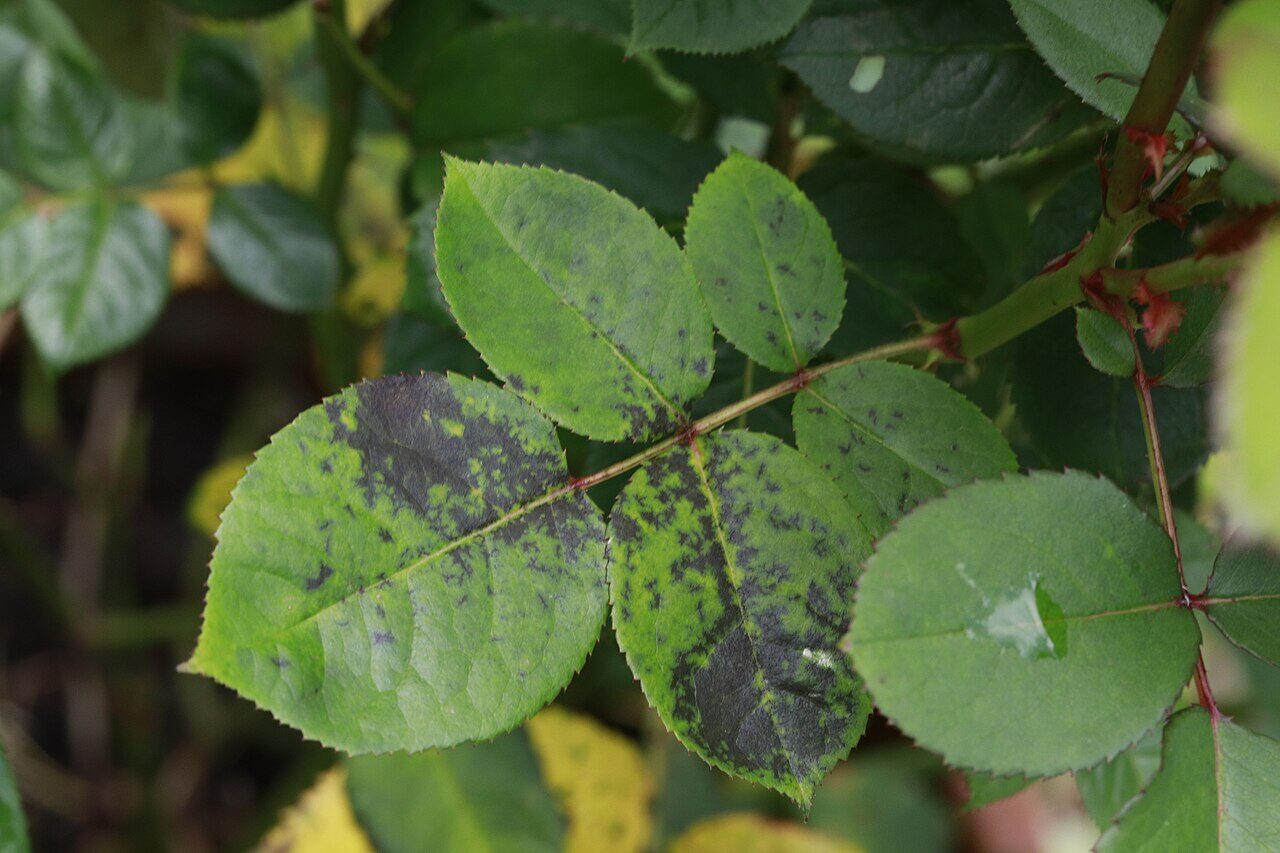
Photo: Stephen James McWilliam, CC0, via Wikimedia Commons
Dark blotches with ragged, feathered edges, surrounded by yellowing leaf, are rose black spot — caused by Diplocarpon rosae. It is the most common rose disease in temperate gardens, and the one most often treated at the wrong end of the year.
How to be sure
The giveaway is the edge of the spot. Black spot blotches have fringed, radiating margins that bleed into the leaf, and the tissue around them turns yellow while the spot stays dark. Badly affected leaves drop, often from the bottom of the plant upwards.
- Rose rust shows bright orange pustules on the leaf underside — turn a leaf over before deciding.
- Downy mildew gives purple-brown angular patches bounded by leaf veins, not rounded blotches, and moves much faster.
- Spray or fertiliser burn is sharply outlined, does not spread over days, and appears only where the liquid landed.
Why it keeps coming back
The spores overwinter on fallen leaves and on the canes themselves, then splash upward onto new spring growth in the first warm rain. That is why the same bush is affected year after year while a rose ten metres away stays clean: the source is directly underneath it.
Infection needs the leaf to stay wet for about seven hours. Overhead watering in the evening is close to ideal for the fungus.
What to do now
- Remove affected leaves, and every fallen leaf under the bush. Bin them, do not compost — this is the single most effective thing you can do.
- Do not strip the plant bare. A rose that loses all its leaves cannot feed itself. Take the worst, leave the rest.
- Water at the base, in the morning. Dry leaves by nightfall break the infection cycle.
- Improve airflow by thinning crowded, crossing stems.
Prevention that actually works
Prune hard in late winter and clear every leaf from the soil surface, then mulch: the mulch buries any spores you missed. Feed with potassium rather than heavy nitrogen — soft, sappy growth is more susceptible.
If you spray, start as the leaves emerge and repeat every two weeks in wet spells. A fungicide applied to leaves already covered in spots is protecting the leaves that have not been infected yet, not curing the ones that have.
And if you are replacing a rose that has struggled for years, choose a variety bred for black spot resistance. It is a far better use of effort than spraying forever.
What Sherleaf says about this photo
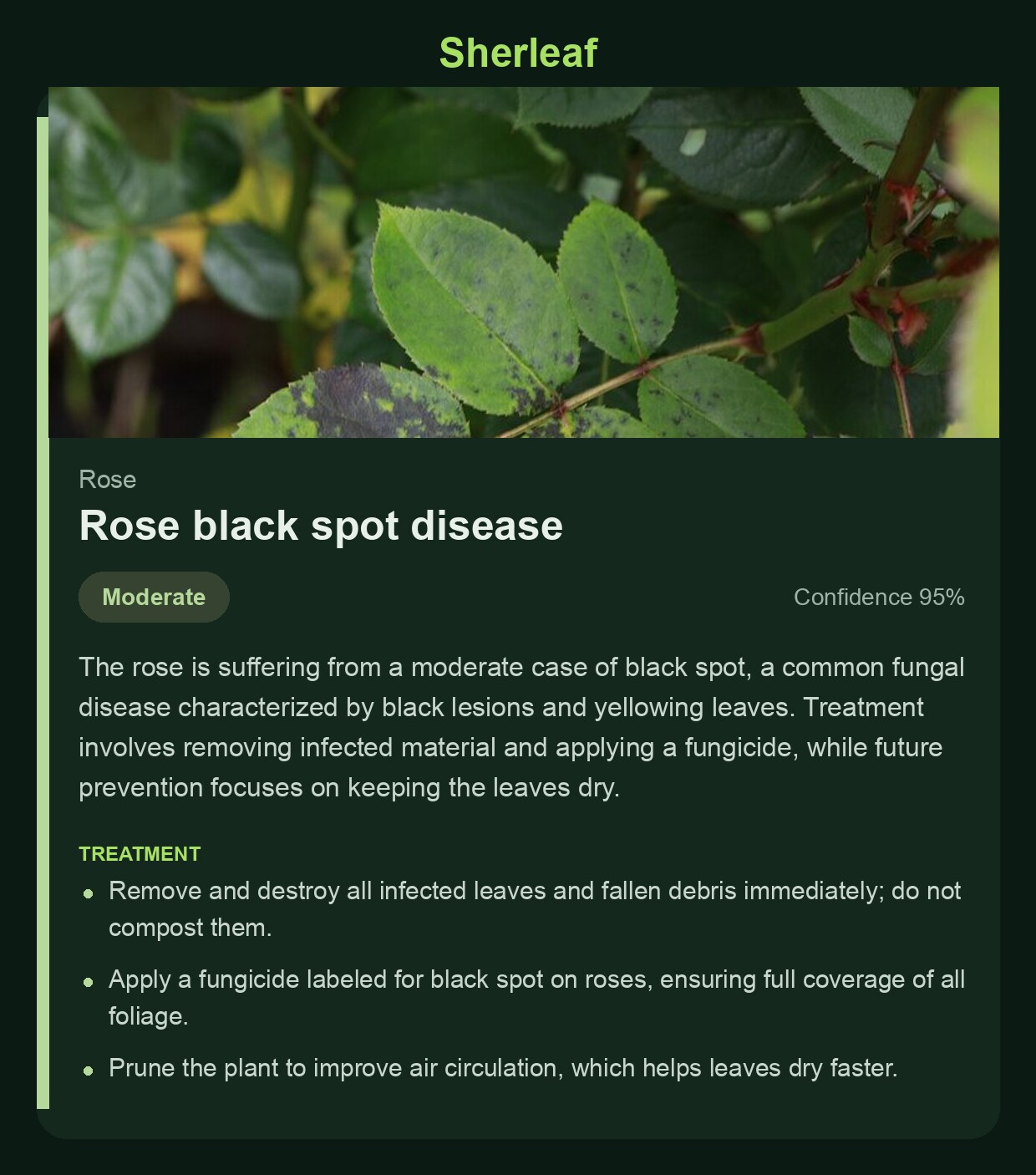
We ran the photo above through Sherleaf. It identified the plant, named the disease, rated the severity and returned a treatment plan in seconds — this is the actual result, unedited.
Try Sherleaf free
Snap a photo of your sick plant and get an AI diagnosis in seconds.