· Sherleaf Team
Brown Bumps on Plant Stems — Scale Insects and How to Treat Them
Hard brown bumps that scrape off with a fingernail are scale insects. Here is how to tell them from bark and disease, and the treatment that reaches them.
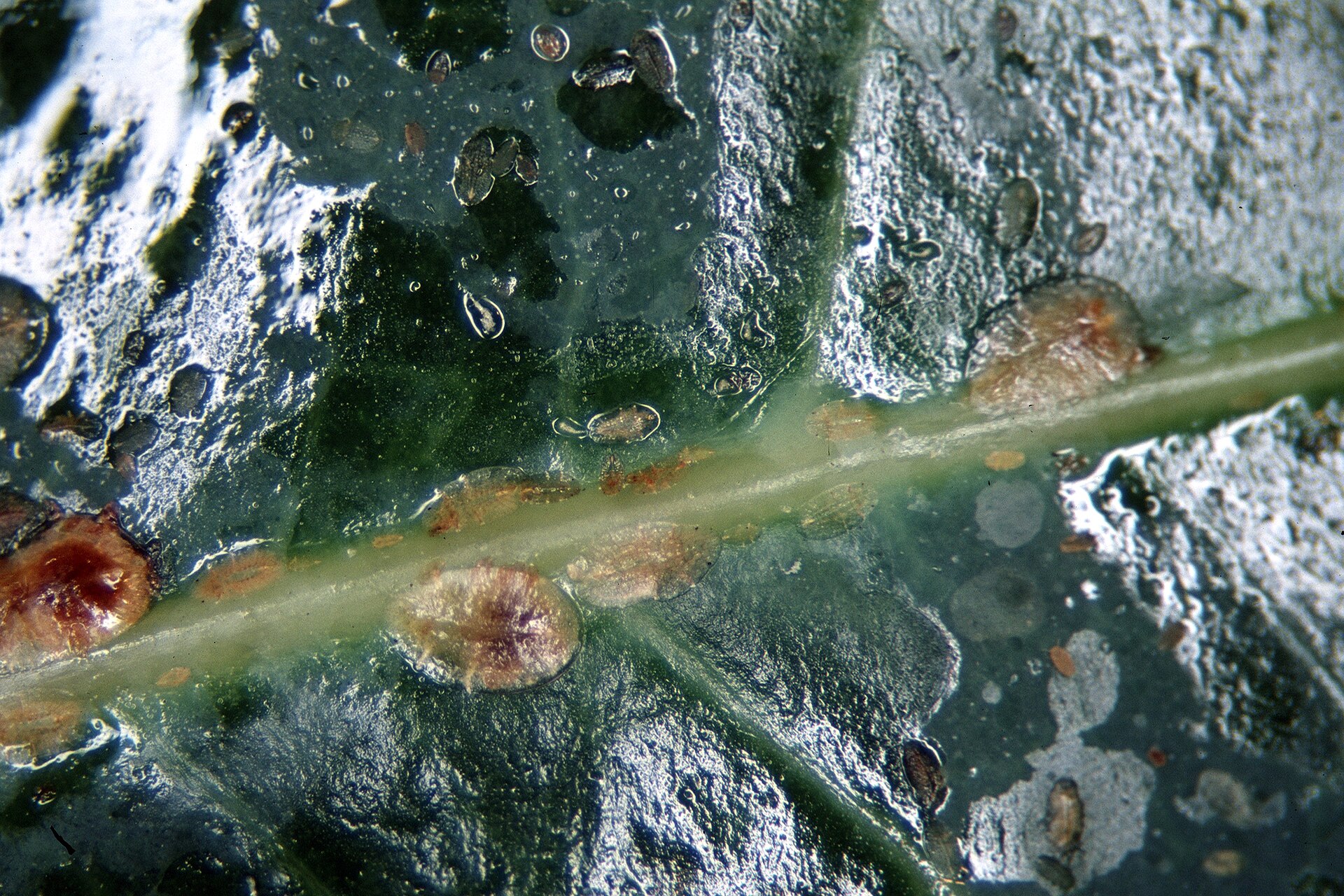
Photo: Whitney Cranshaw, Colorado State University, United States, Bugwood.org, CC BY 3.0 us, via Wikimedia Commons
Small oval bumps, tan to dark brown, that sit motionless along stems and leaf veins and scrape off with a fingernail, are scale insects. They look so much like part of the plant that most people find them only after noticing something else: sticky leaves, or a black sooty film on the surfaces below.
Is it an insect or the plant?
Scrape one off. A scale insect detaches as a distinct shell, often leaving a slightly greener patch beneath, and the underside is soft and moist. Natural bumps — lenticels, leaf scars, corky growth — are continuous with the tissue and will not lift. If your fingers come away sticky, it is scale: that stickiness is honeydew, and the sooty mould that follows grows on it.
Why sprays usually fail
The adult's shell is a shield. Contact insecticides bounce off it entirely, which is why people report spraying weekly for a month with no effect. Only the mobile young stage, the "crawlers", is vulnerable to contact treatment — and they are barely visible.
What actually works
- Physically remove what you can see. Fingernail, old toothbrush, or a cloth with soapy water. On a small houseplant this is often the whole treatment.
- Follow with horticultural oil. Oil works where insecticide does not: it smothers the insect under its own shell. Coat stems and both leaf surfaces.
- Repeat every 10–14 days, three times. This catches successive waves of crawlers as they hatch.
- Prune out heavily encrusted stems rather than trying to clean them.
- Wash off the sooty mould once the insects are gone — it is harmless in itself but blocks light.
Prevention
Scale spreads slowly and almost always arrives on a new plant, so quarantine is unusually effective here. Check the undersides of leaves and the joints where leaf meets stem, especially on citrus, ficus, ivy and orchids.
Not sure that's what you have?
Symptoms overlap, and the wrong treatment wastes weeks. Photograph the affected leaf with Sherleaf and you get the diagnosis, a severity rating and a treatment plan in about ten seconds.
Try Sherleaf free
Snap a photo of your sick plant and get an AI diagnosis in seconds.