· Sherleaf Team
Vine Weevil Damage on Rhododendron — How to Identify and Treat It
Those mysterious notches on your rhododendron leaves? It's probably vine weevils. Here's how to spot the damage, treat it, and protect your plants.
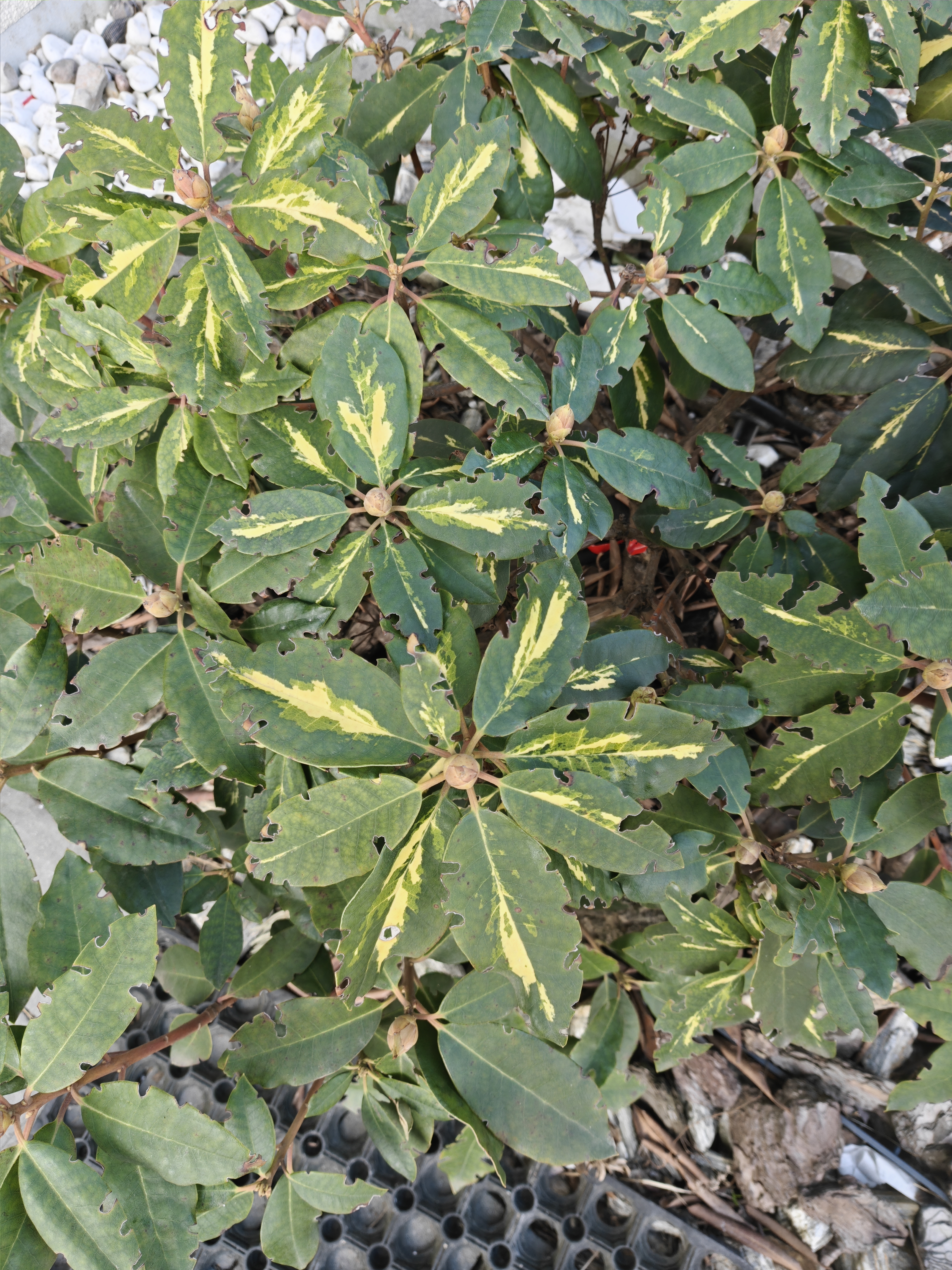
What does vine weevil damage look like?
If your rhododendron leaves have irregular, half-moon shaped notches along the edges, you're almost certainly looking at vine weevil feeding damage. The adult beetles feed at night, chewing characteristic semicircular bites from the leaf margins.
The damage pattern is unmistakable: clean, rounded notches — not ragged tears from wind or rough holes from caterpillars. The weevils work their way around the leaf edge, leaving a scalloped appearance.
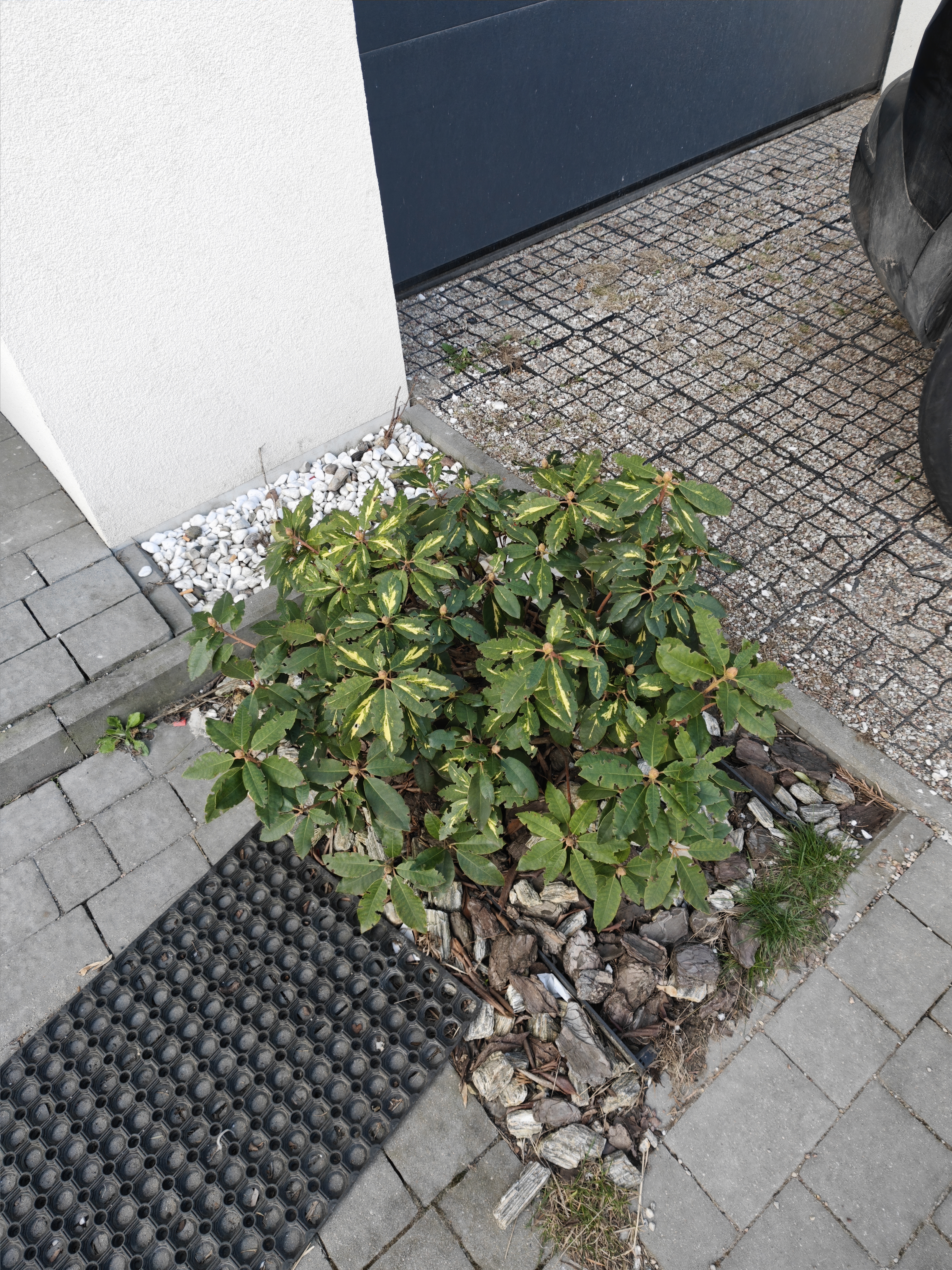
We tested it with Sherleaf AI
We photographed this rhododendron and ran it through Sherleaf in five different languages. The AI correctly identified vine weevil feeding damage every time, with 95% confidence — in English, Spanish, French, German, and Polish.
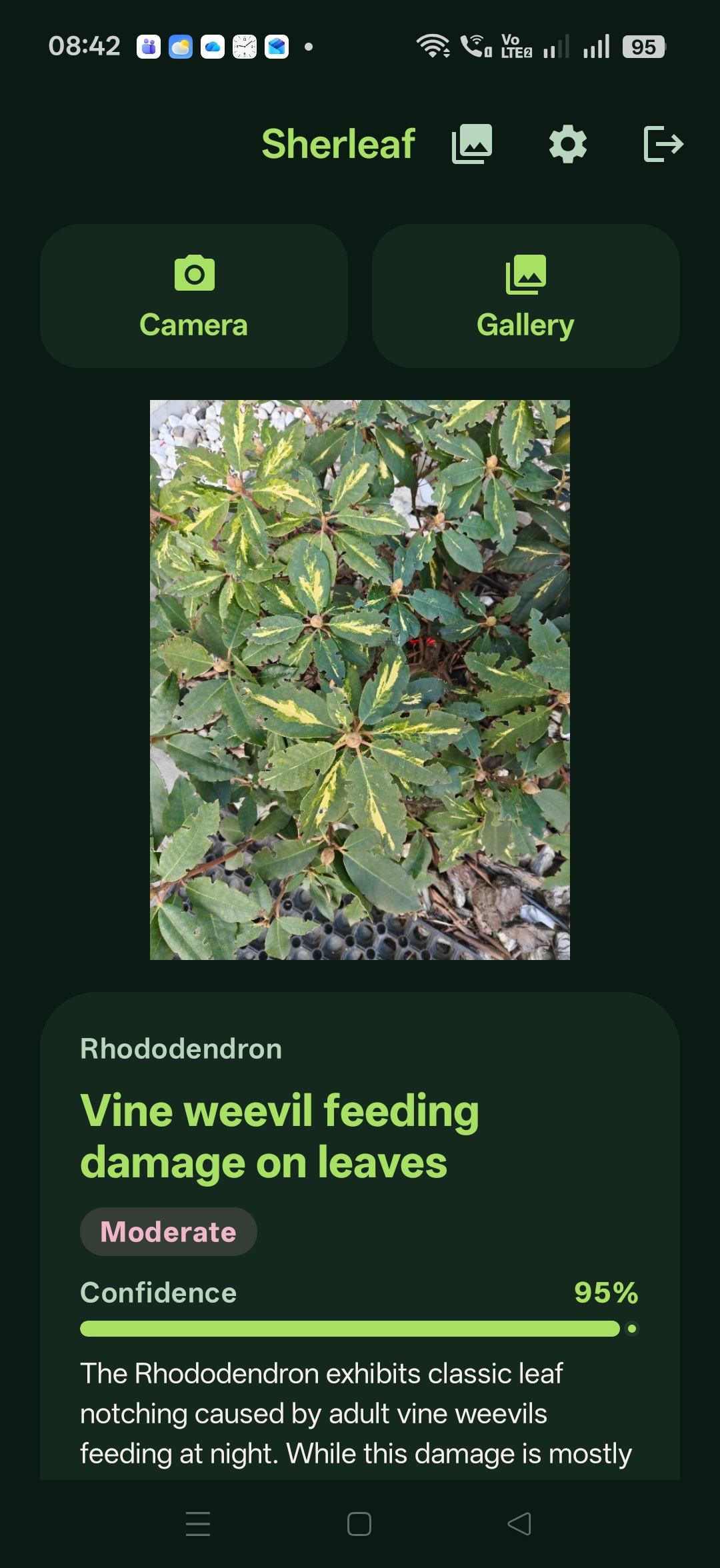
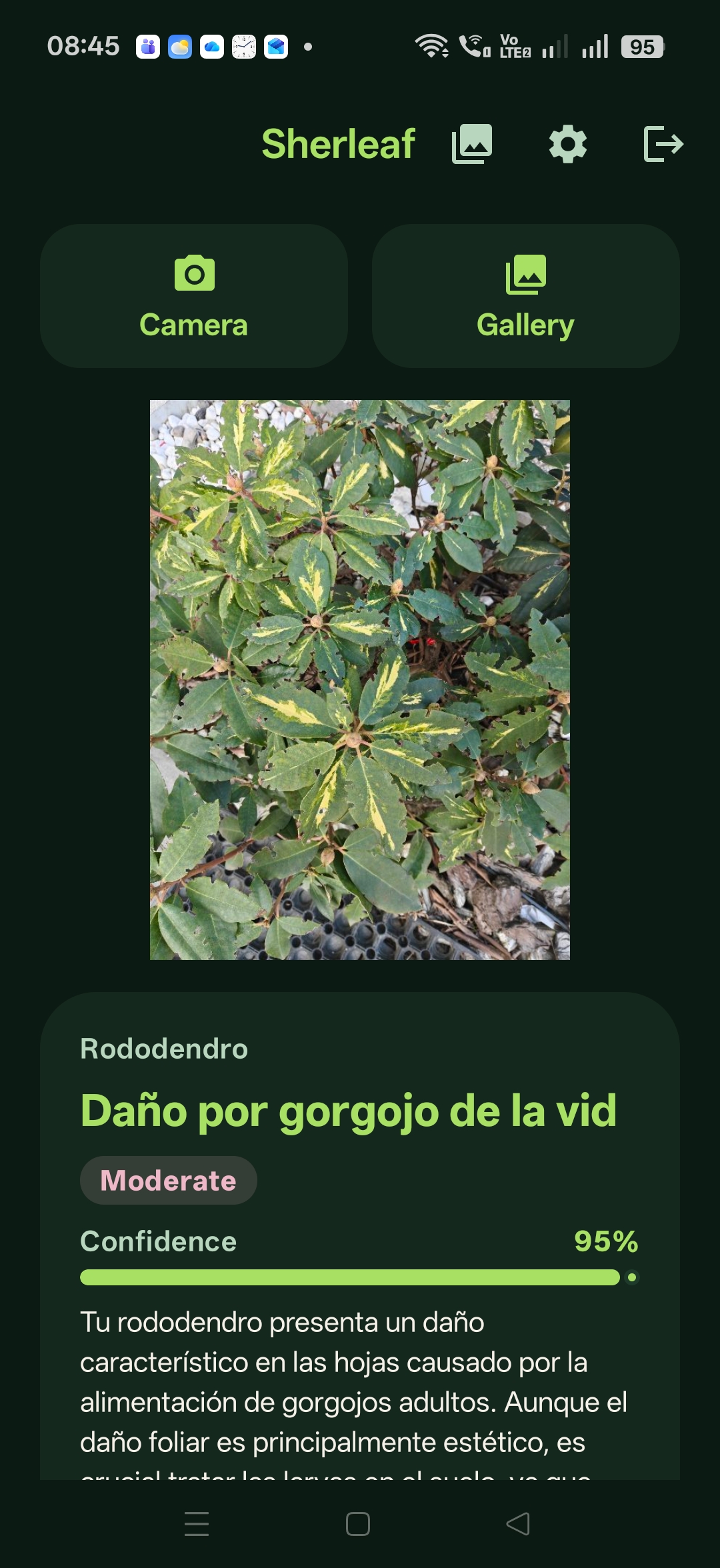
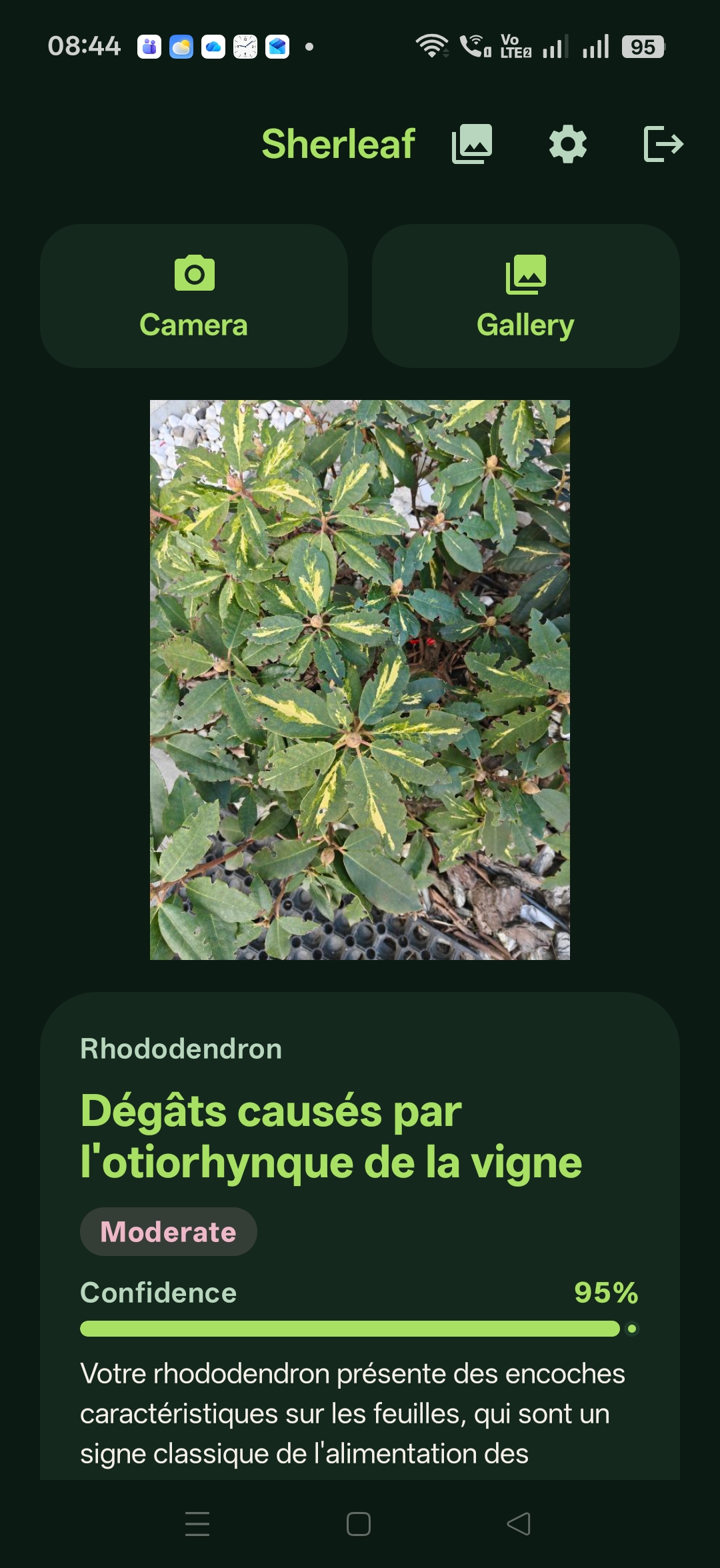
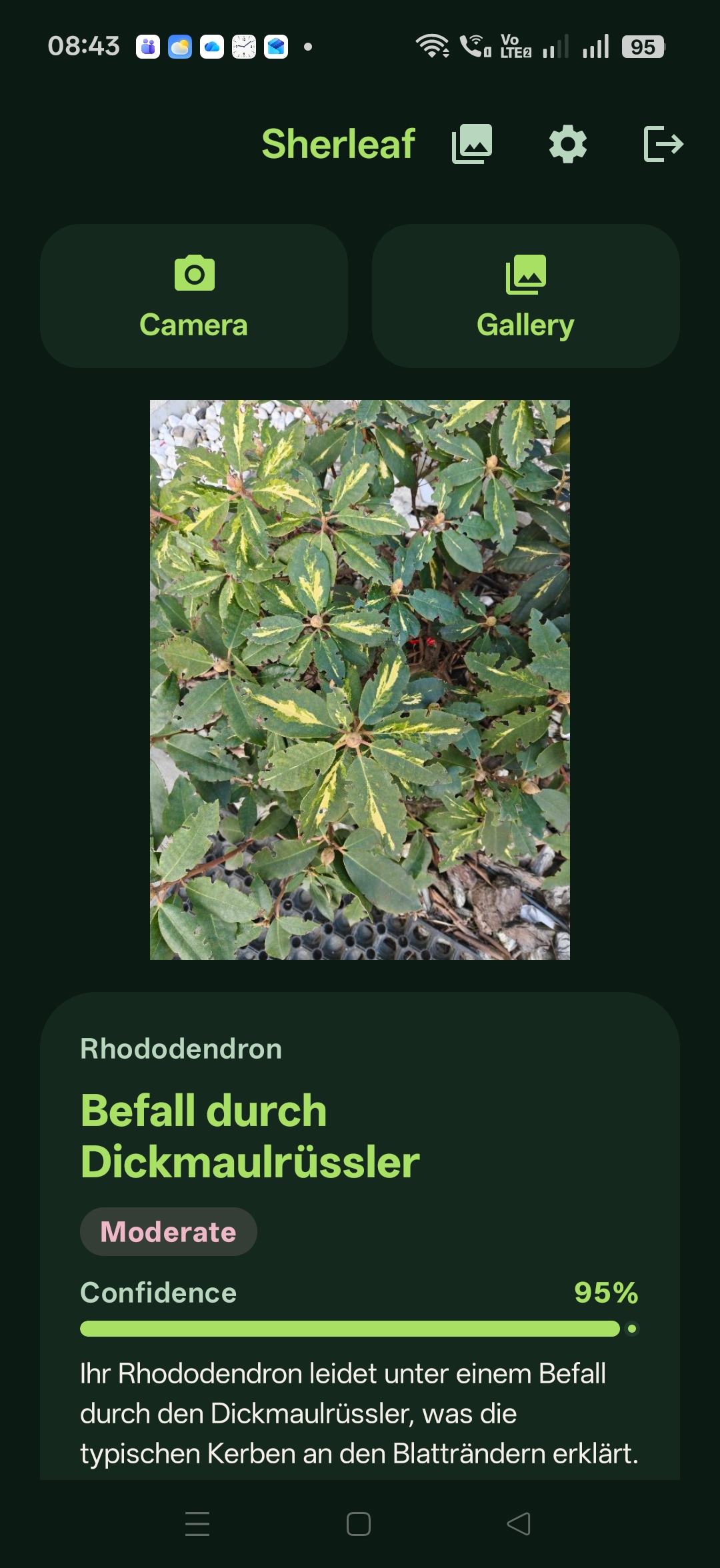
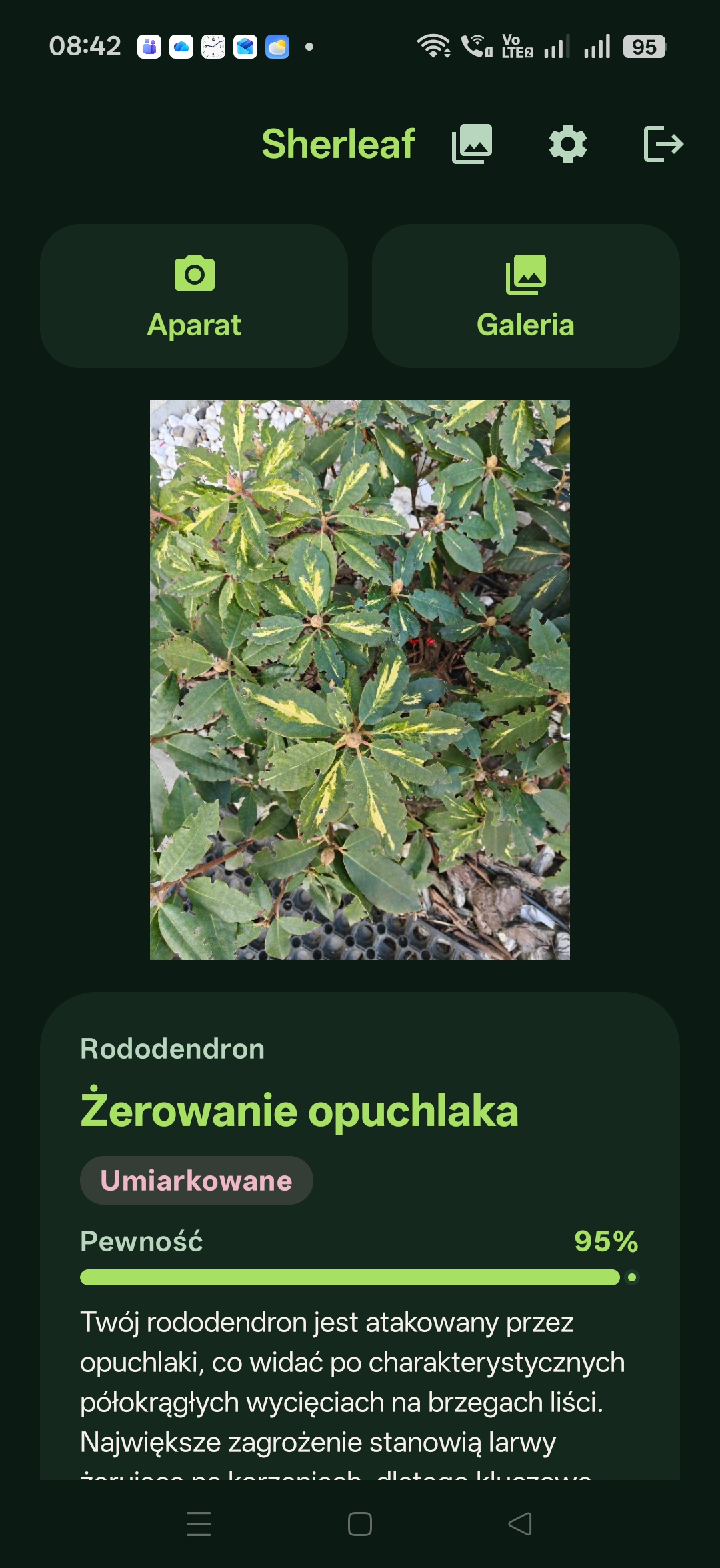
Same photo, five languages, same diagnosis at 95% confidence. That consistency matters when you need reliable information regardless of what language you speak.
Why vine weevils attack rhododendrons
Vine weevils (Otiorhynchus sulcatus) are among the most common garden pests in temperate climates. They're particularly fond of:
- Rhododendrons and azaleas
- Camellias
- Strawberries
- Heucheras
- Container plants and houseplants
The adults cause cosmetic leaf damage, but the real danger is underground: vine weevil larvae feed on roots, which can kill the plant entirely. If you see the telltale notches on the leaves, check the roots.
How to treat vine weevil damage
Immediate steps
- Inspect at night. Adult weevils are nocturnal. Go out with a torch after dark and pick them off by hand. They drop when disturbed, so hold a tray underneath.
- Check the roots. If the plant looks wilted despite adequate watering, tip it out and look for white, C-shaped larvae in the compost. Healthy roots are white and firm; damaged roots are brown and mushy.
- Apply biological control. Nematodes (Steinernema kraussei or Heterorhabditis megidis) watered into the soil will kill the larvae. Apply in spring or autumn when soil temperature is above 5°C.
Long-term prevention
- Vine weevil traps — boards or rolled-up newspaper left near plants overnight attract adults.
- Barrier methods — sticky bands around containers or copper tape can deter climbing.
- Chemical control — acetamiprid-based products can be applied as a drench for severe infestations.
- Encourage predators — birds, hedgehogs, and ground beetles all eat vine weevils.
When to worry
Leaf notching alone is mostly cosmetic — the plant will survive. The real concern is larval root damage. Signs to watch for:
- Plant wilting despite watering
- Yellowing leaves without obvious cause
- Plant feels loose in the soil (roots eaten away)
- Container plants collapsing suddenly
If you spot any of these, act fast — the larvae can consume an entire root system in a few weeks.
Snap, diagnose, treat
Not sure if it's vine weevils or something else? Take a photo with Sherleaf and get an AI diagnosis in seconds. The app identifies the problem, rates the severity, and gives you a treatment plan — no botany degree required.
Try Sherleaf free
Snap a photo of your sick plant and get an AI diagnosis in seconds.