· Sherleaf Team
Winter Burn on Evergreen Plants — Why Your Shrubs Turned Brown and What to Do
Evergreen hedge or shrub turned brown after winter? It's probably winter burn — frost damage and desiccation. Here's how to identify it, which plants are affected, and how to save them.
What is winter burn?
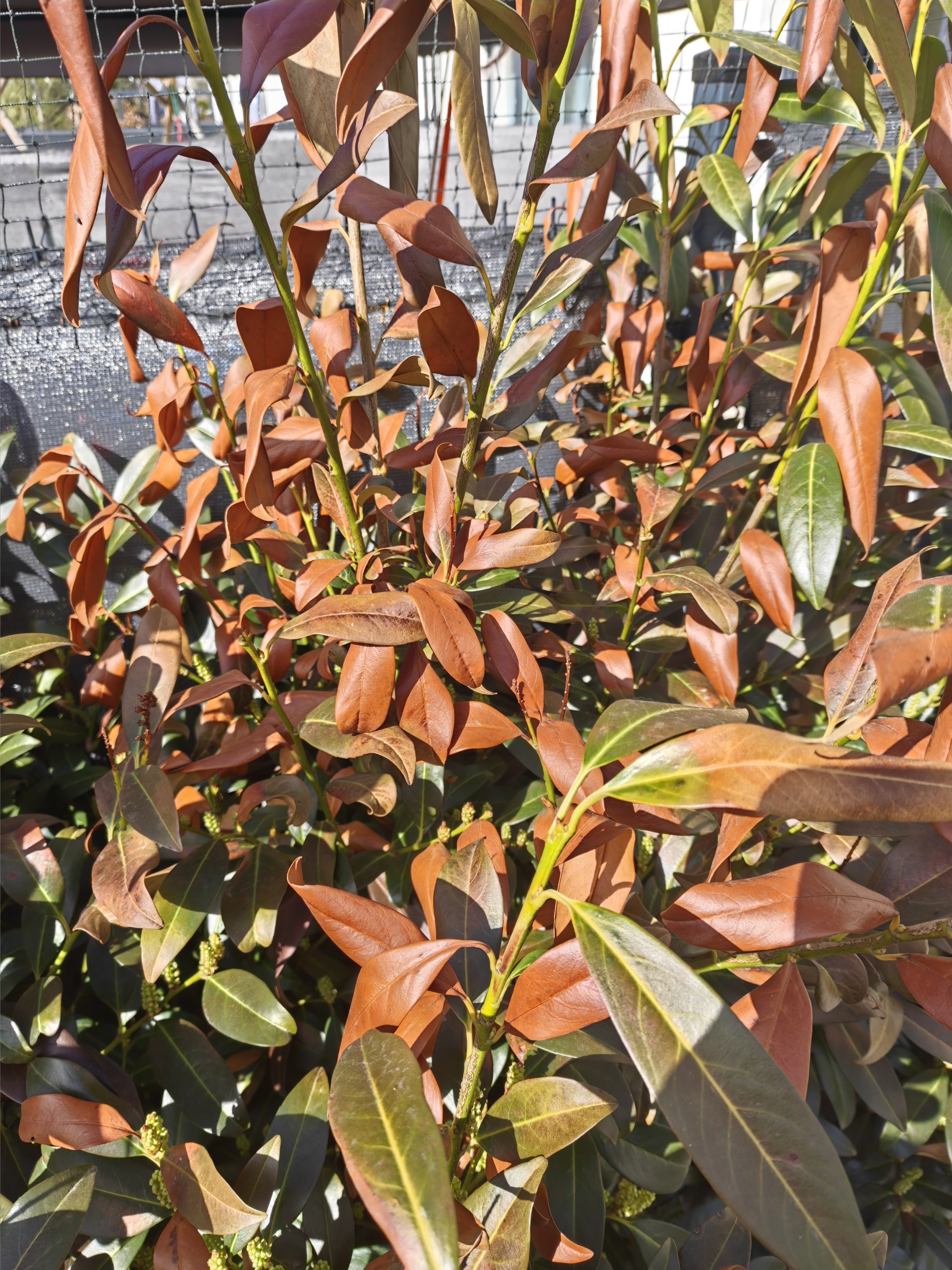
Every spring, gardeners across the northern hemisphere wake up to the same shock: their evergreen shrubs and hedges have turned brown overnight. The leaves are dry, crispy, and curled — and it looks like the plant is dead.
This is winter burn, also called winter desiccation. It happens when cold, dry winds pull moisture from evergreen leaves while the frozen ground prevents roots from replacing it. The plant literally dries out from the outside in.
Which plants get winter burn?
Almost any evergreen can suffer, but these are the most commonly affected:
- Cherry laurel (Prunus laurocerasus) — the most common victim in European gardens
- Boxwood (Buxus) — bronzed or orange leaves after cold snaps
- Rhododendron and azalea — curled, drooping, brown-tipped leaves
- Holly (Ilex) — brown patches on exposed sides
- Arborvitae / Thuja — brown tips and entire branches
- Yew (Taxus) — needles turn brown from the tips
- Euonymus — scorched leaf edges
- Photinia — red-turning-brown new growth
How to tell it's winter burn (not disease)
Winter burn has a distinctive pattern that separates it from disease or pest damage:
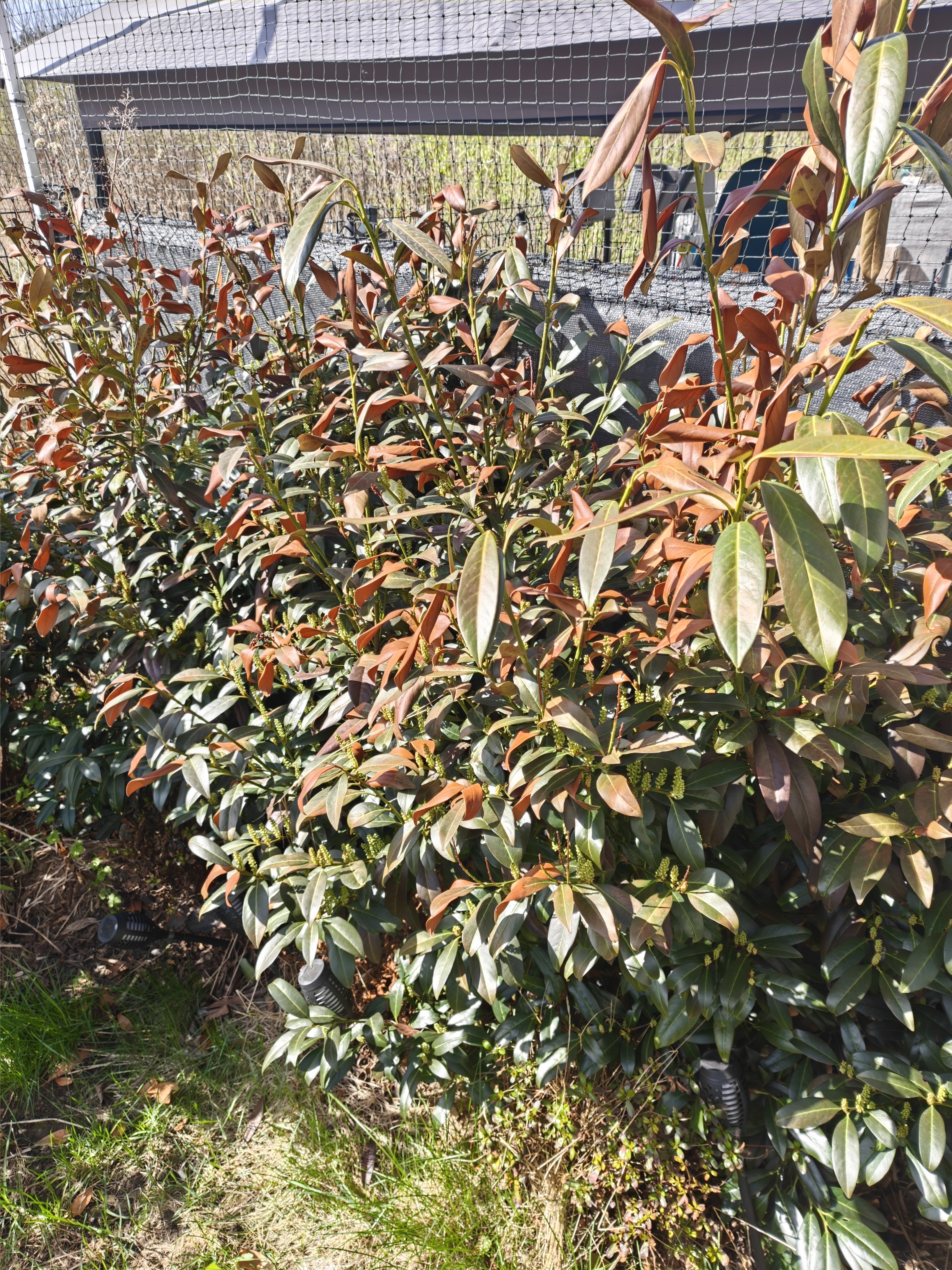
- Damage is on the exposed side — the south or windward face of the plant is worst. The sheltered side is green.
- No spots or patterns on leaves — just uniform browning from tips/edges inward
- Stems are still green inside when you scratch the bark
- It appeared after winter — the plant looked fine in autumn
If the damage is even all around, or you see spots, rings, or fuzzy growth — that's more likely a fungal problem. Snap a photo with Sherleaf to check.
We tested it with Sherleaf AI
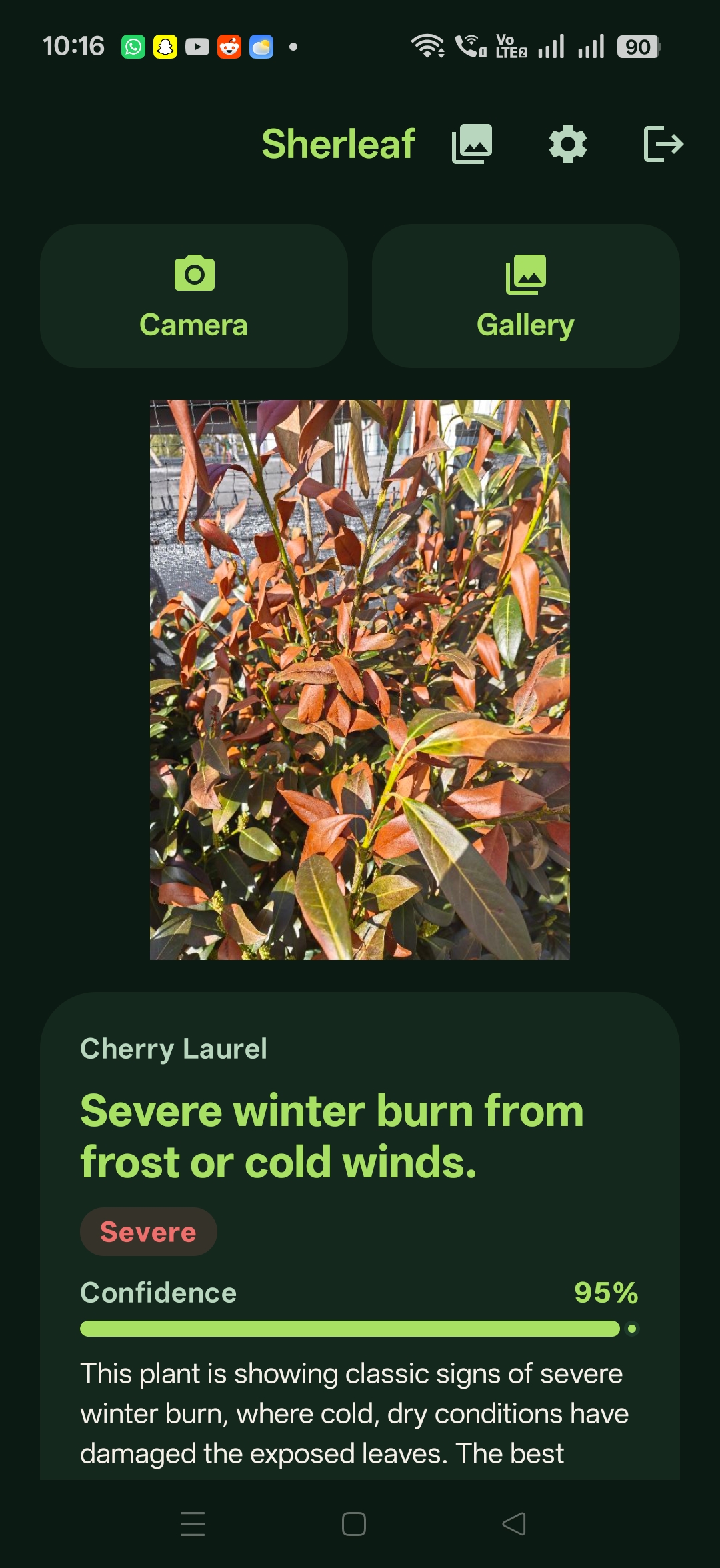
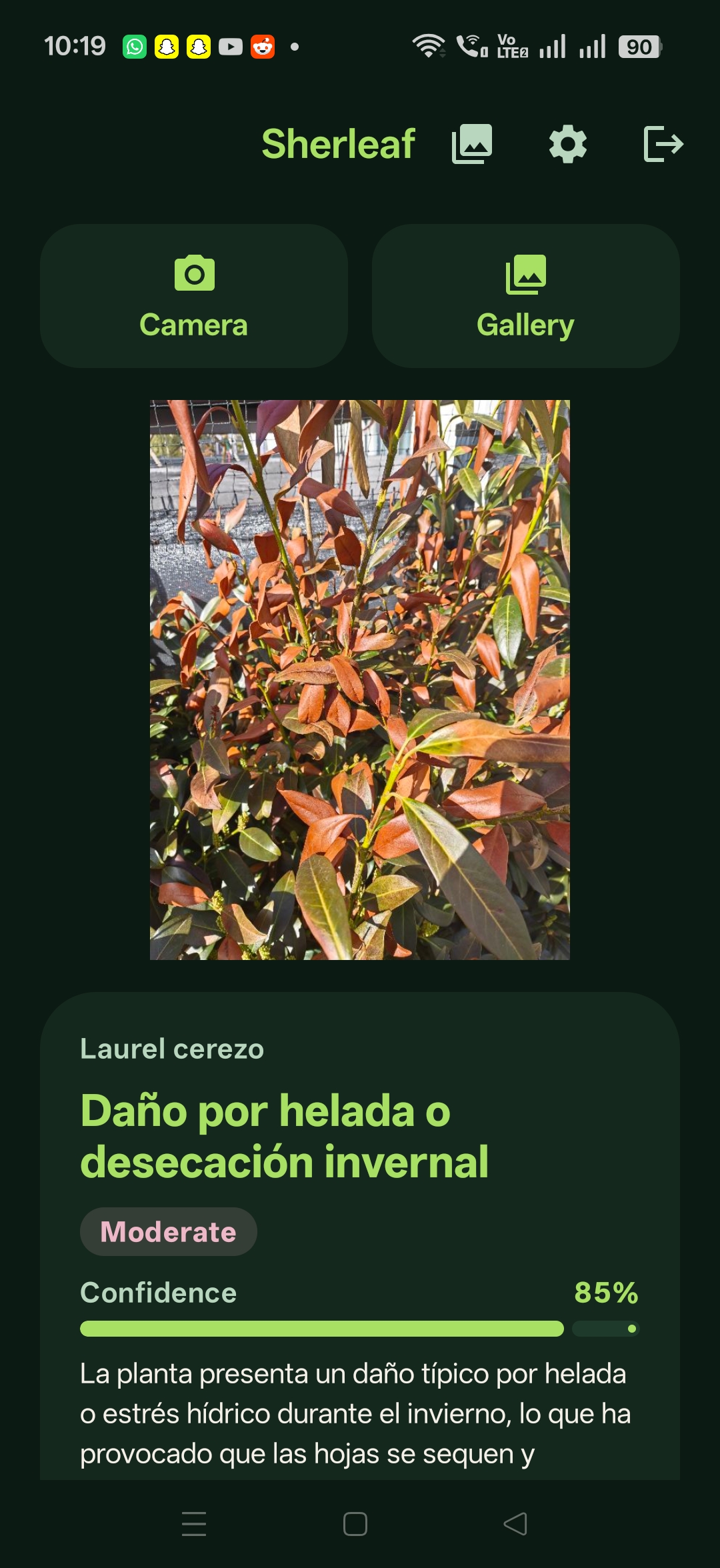
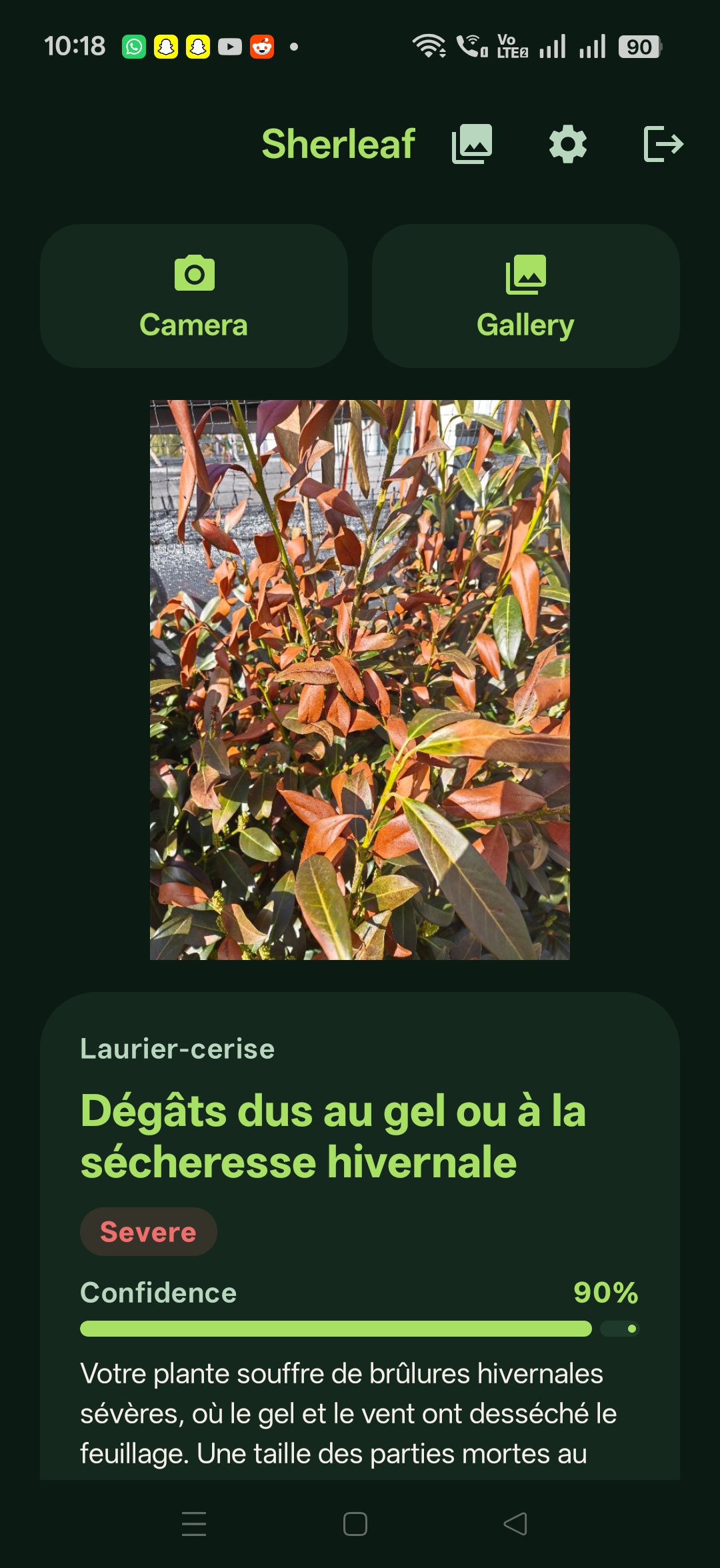
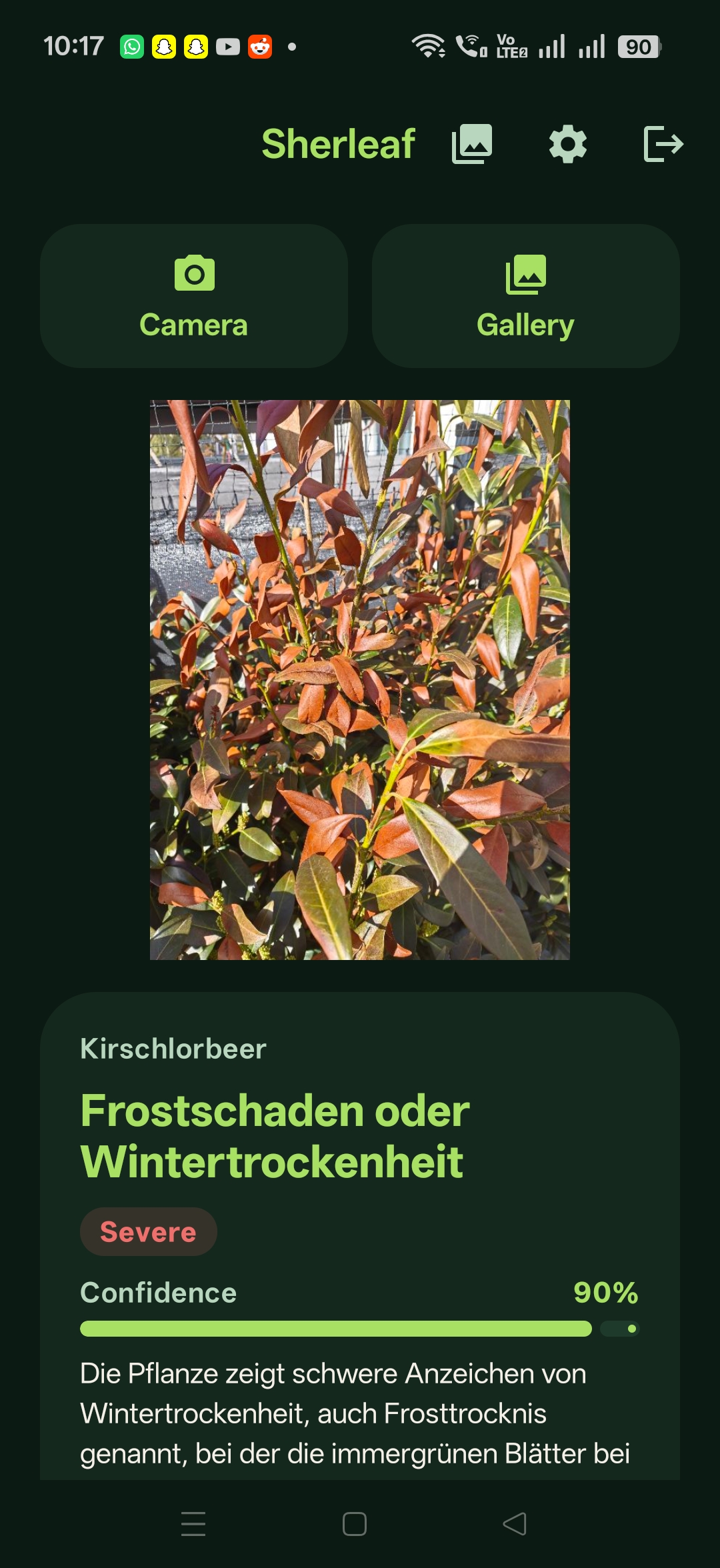
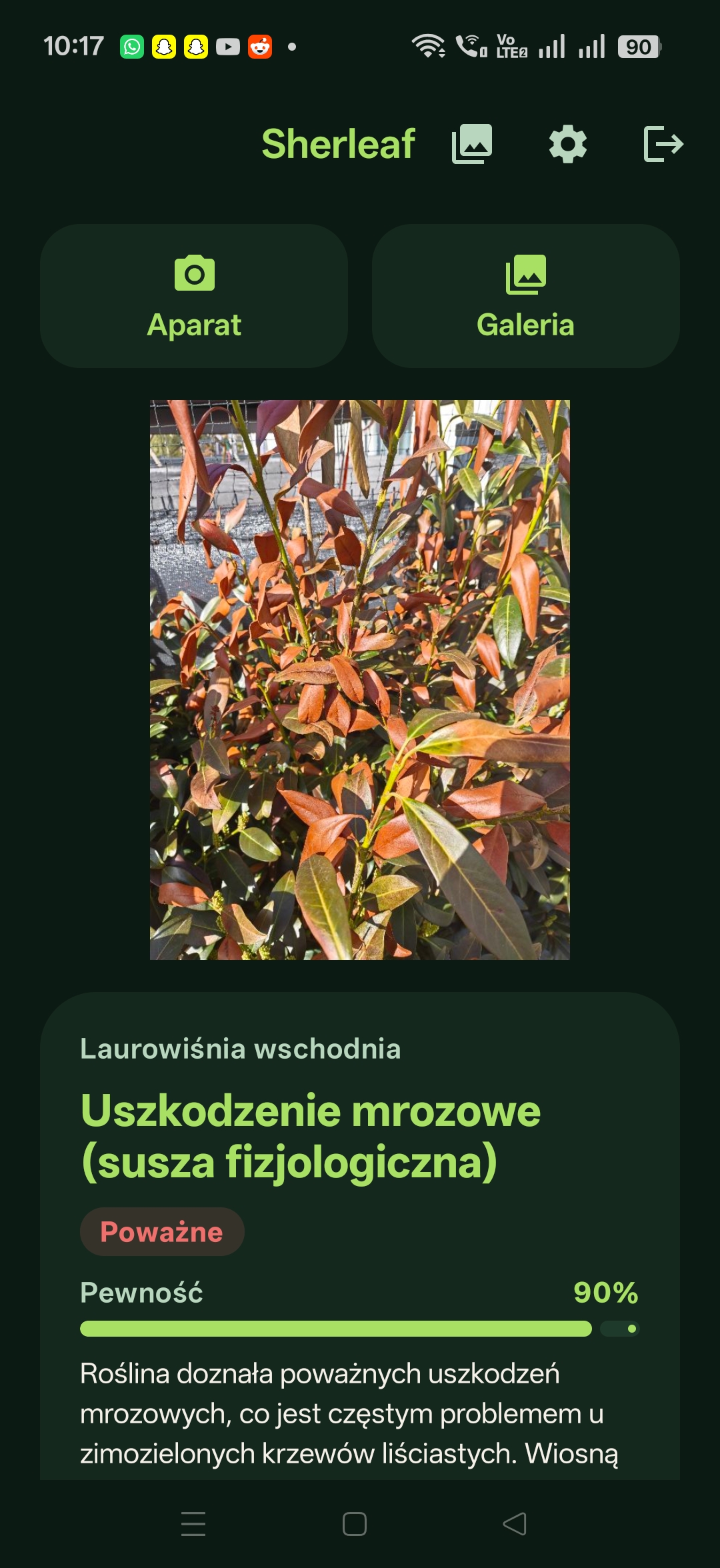
We photographed a winter-burned cherry laurel and ran it through Sherleaf in five languages. The AI correctly identified severe winter burn from frost and cold winds every time, with 85–95% confidence.
Will my plant recover?
Almost certainly yes. Winter burn looks worse than it is. The leaves are dead, but the stems and buds are usually alive. Most evergreens push new growth in April–May and look normal again by summer.
What to do now
- Don't panic-prune yet. Wait until late April or May. The plant needs time to show where new buds will break.
- Water deeply. Winter-burned plants are dehydrated. Give them a thorough soaking as soon as the ground thaws.
- Scratch-test the stems. Scratch a small section of bark with your thumbnail. Green underneath = alive. Brown = dead wood you can prune.
- Wait for new growth. Once you see green buds emerging, prune back all dead material to just above the new growth.
- Feed lightly. A balanced fertilizer (10-10-10) in late spring supports recovery.
How to prevent it next year
- Deep watering in late autumn — plants with full moisture reserves survive winter better
- Mulch the root zone — 5–10 cm of bark or compost insulates roots and holds moisture
- Wind barriers — burlap or mesh screen on the exposed side of vulnerable hedges
- Anti-desiccant spray — products like Wilt-Pruf coat leaves and reduce winter moisture loss
- Choose the right plant — some cultivars handle cold better than others. Ask your local nursery for hardy varieties for your zone.
When to give up
If it's late May and there's no new growth at all, the roots may be dead. Signs a plant won't recover:
- Stems are brown and dry all the way to the base
- No green buds visible anywhere after scratching bark
- Root ball is mushy or rotten
But give it until June — evergreens can surprise you with late recovery.
Snap, diagnose, treat
Not sure if it's winter burn, disease, or something else? Take a photo with Sherleaf and get an AI diagnosis in seconds. The app identifies the problem, rates the severity, and tells you exactly what to do — in your language.
Try Sherleaf free
Snap a photo of your sick plant and get an AI diagnosis in seconds.