· Sherleaf Team
Tiny Black Flies in Plant Soil — Fungus Gnats and How to Stop Them
Small black flies rising from the pot when you water are fungus gnats. Harmless to you, damaging to seedlings — here is how to break the cycle for good.
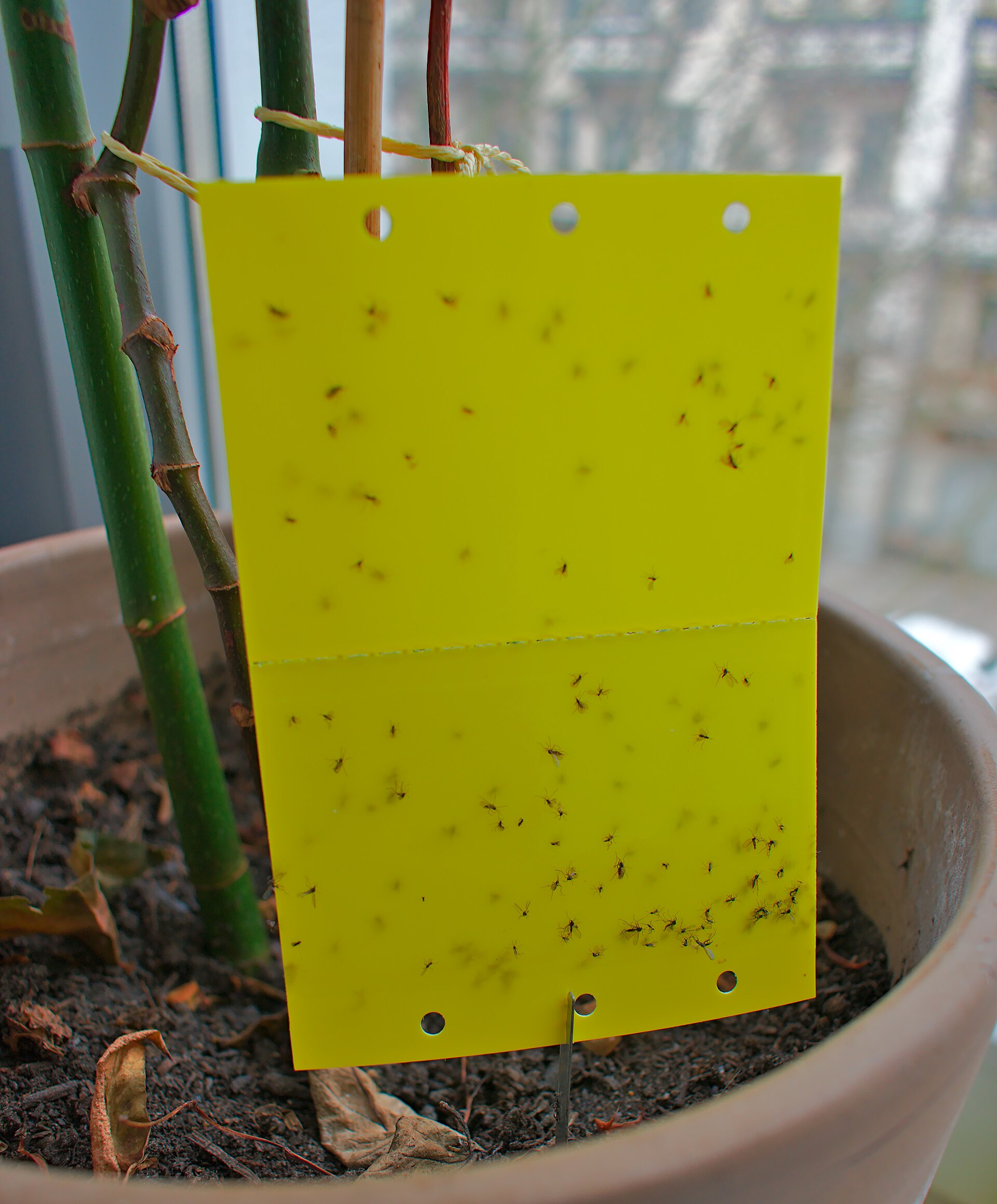
Photo: Ich, CC BY-SA 4.0, via Wikimedia Commons
Small dark flies that drift up whenever you water, then settle on the soil rather than the leaves, are fungus gnats. The adults are a nuisance and nothing more. The larvae, down in the top few centimetres of compost, are the actual problem: they feed on organic matter and, when numerous, on fine roots.
Telling them apart from fruit flies
Fruit flies hover around fruit and drains, are rounder, and are usually tan with red eyes. Fungus gnats are slimmer, darker, long-legged, and they always come back to the pot. If flies rise in a puff when you nudge the soil, they are gnats.
Why you have them
One reason, almost always: the top of the compost stays wet. Gnats lay into damp organic material, and peat-based potting mixes in low winter light stay damp for a long time. A bag of compost left open in a shed frequently arrives already colonised.
Breaking the cycle
- Let the top 3 cm dry out completely between waterings. This alone ends most infestations, because eggs and young larvae desiccate.
- Water from below for a few weeks so the surface stays dry while the roots still drink.
- Yellow sticky traps catch the adults and, more usefully, tell you whether the population is falling.
- For a heavy infestation, treat the larvae — Bacillus thuringiensis israelensis (mosquito bits) or beneficial nematodes, watered in, kill them without touching the plant.
- Top-dress with 1 cm of coarse sand or grit. It dries fast and the females cannot reach the compost to lay.
What not to bother with
Spraying the adults achieves almost nothing — for every fly you see, there are larvae and eggs in the pot. Cinnamon and dish soap are widely recommended online and perform poorly in practice. Drying the surface is the treatment; everything else is support.
Not sure that's what you have?
Symptoms overlap, and the wrong treatment wastes weeks. Photograph the affected leaf with Sherleaf and you get the diagnosis, a severity rating and a treatment plan in about ten seconds.
Try Sherleaf free
Snap a photo of your sick plant and get an AI diagnosis in seconds.